
Brutalist Planner

Updated: Jul 8
Obama Presidential Center, Jackson Park, Chicago
In June 2026, the Obama Presidential Center has finally opened in Chicago's Jackson Park. It showcases an architectural style that blends elements of modernism instead of adhering strictly to Brutalism. Designed by the architecture firm Tod Williams Billie Tsien Architects, the center focuses on fostering a connection with the surrounding landscape and community.
While not Brutalist in the traditional sense, it does reflect some Brutalist principles, such as a focus on raw materials and strong geometric forms. The design aims to create inclusive public spaces that honor the legacy of Barack Obama and the neighborhood's history. Features include green roofs, open areas for community engagement, and a public plaza, contributing to its modern yet grounded aesthetic.
The Obama Presidential Center's architecture is notable for its thoughtful integration with the surrounding environment and community. However, this iconic structure has sparked controversy, eliciting mixed reviews. Some critics, described as "cynical," have criticized it for having a depressing appearance.
The design promotes accessibility and community engagement. It encourages interaction among visitors, reflecting Obama's emphasis on community and connection. The center uses locally sourced materials, aiming for a more sustainable and relatable architectural expression. The building will have a mix of concrete, wood, and glass, creating a warm and inviting atmosphere.
The center is designed to blend seamlessly with Jackson Park and its natural landscape. It includes extensive outdoor spaces, such as gardens and walking paths, fostering a connection to nature. While primarily modernist, the use of bold, geometric forms and raw materials contains echoes of Brutalist architecture. The emphasis on communal spaces and functionality aligns with some Brutalist ideals.
Brutalism is a distinctive architectural style that emerged in the mid-20th century, characterized by its raw concrete construction, bold geometric forms, and functional aesthetics.
The term "Brutalism" is derived from the French phrase "béton brut," meaning "raw concrete." It gained popularity in the 1950s and 1960s, influenced by earlier modernist movements and architects like Le Corbusier, who emphasized functionality and material honesty.

Brutalist architecture is an architectural style that emerged during the 1950s in the United Kingdom, among the reconstruction projects of the post-war era. Brutalist buildings are known for minimalist construction showcasing the bare building materials and structural elements over decorative design. The style commonly makes use of exposed, unpainted concrete or brick, angular geometric shapes and a predominantly monochrome color palette; other materials, such as steel, timber, and glass, are also featured.

After World War II, there was a demand for affordable housing and public buildings. Brutalist architecture emerged as a response, offering a cost-effective solution using concrete and simple forms that could be mass-produced. Brutalism often focused on social purpose, creating spaces for urban planning, community and civic engagement.
Brutalism is marked by its rugged, raw materials, monolithic appearance, and emphasis on structure. It often features large volumes, exposed concrete, and a lack of ornate detailing. By the 1970s, Brutalism faced criticism for its perceived coldness and inhumanity, leading to a decline in popularity. However, in recent years, there has been a renewed interest in Brutalist buildings, with appreciation for their bold aesthetics and historical significance.

Brutalism remains a polarizing style, celebrated by some for its honesty and functional design while criticized by others for its starkness.
Is the Obama Presidential Center mocking Britain's Brutalism, or is it celebrating Britain's Brutalist as a significant "urban planner" in history?
Was the UK a great planner throughout history? The colonial British Empire might suggest "Yes." However, there was a failure that could explain how the British Empire declined due to poor urban planning.
By public history records, British Hong Kong was a British colony from 1841 to 1997, shaped by the First and Second Opium Wars, the cession of Hong Kong Island in 1842, Kowloon in 1860, and the lease of the New Territories in 1898. Britain occupied Hong Kong during the First Opium War, and the Treaty of Nanking ceded Hong Kong Island to Britain.
In 1860, the Convention of Peking added Kowloon Peninsula to British territory. In1898, Britain leased the New Territories for 99 years, greatly expanding the colony. 1941 to 1945, Japan occupied Hong Kong during World War II, interrupting British rule. 1997, Hong Kong was returned to China under the Sino-British Joint Declaration.
British rule turned Hong Kong into a major port, financial center, and meeting point of Chinese and Western influences. The colonial era also left lasting marks on the city’s legal system, institutions, infrastructure, and urban culture.
The colonial relationship began in the wider context of British trade interests and the opium trade, which led to conflict with Qing China. Over time, Hong Kong developed under a hybrid colonial system that remained in place until the 1997 handover.
Kowloon Walled City, Hong Kong
Kowloon City, often referred to as Kowloon Walled City, is a unique and historically significant site in Hong Kong. The area originally served as a military outpost during the Song Dynasty (960-1279). In the late 19th century, it became a fortified garrison under British colonial rule, established to control the access to Victoria Harbour.
After World War II, the British declared the Walled City a "no man's land" following the withdrawal of Chinese troops. This led to a population influx, as squatters built makeshift homes and small businesses within its confines. The Walled City was known for its high-rise buildings, tightly packed structures, and complex network of narrow alleyways. It hosted numerous businesses, including small factories, restaurants, and shops, operating under a shadow economy.
In the 1980s, concerns about public health and safety led the Hong Kong government to demolish the Walled City. By 1993, it was completely cleared, and the Kowloon Walled City Park was developed in its place, retaining some historical features, such as remnants of the walls and the South Gate. Kowloon Walled City remains a symbol of resilience and adaptation, representing a unique chapter in Hong Kong's urban and social history.
Inside Kowloon City - Hongkong Colonial History
Kowloon City has a deep colonial-era history, but it was never a simple “British-built” district. Before full British control, the area already had Chinese administrative and military significance through the Kowloon Walled City, which was established in the Chinese Qing era and became strategically important after Hong Kong Island was ceded to Britain.
After 1842, the Kowloon Walled City remained a Qing enclave inside the broader British colonial landscape, making Kowloon City a politically unusual border zone. The British later expanded control over the Kowloon Peninsula after the Second Opium War in 1860, which brought areas around today’s Kowloon City more directly into the colony.
Under British rule, the wider Kowloon area developed from scattered Chinese villages and stonecutters’ settlements into a more urban district with roads, docks, barracks, and later airport-linked growth. Kowloon City itself became closely tied to the Walled City, nearby military and administrative activity, and later to Kai Tak Airport, which shaped building patterns and development for much of the 20th century.
Why it stands out?
Kowloon City is historically important because it sat at the edge of Chinese and British systems at the same time, especially around the Walled City. That tension made the district one of the most distinctive places in colonial Hong Kong, especially before the Walled City was demolished and replaced by Kowloon Walled City Park.
Kowloon Walled City was located in the middle of the Kowloon Peninsula, about two kilometers from Victoria Harbour. In 1842, the Chinese Qing government signed the Treaty of Nanking with the British. The treaty stipulated that the Qing government would cede Hong Kong Island to Britain.
Hong Kong Island and the Kowloon Peninsula were separated by a strait, so the location of Kowloon Walled City became even more important. On one hand, the Qing government had to keep an eye on what the British were up to; on the other hand, piracy hadn’t disappeared. As public history tells, in 1898, the Chinese Qing government also ceded the Kowloon Peninsula and the New Territories to the British. But what public history doesn’t say is that the Qing government made a special note in the treaty: the sovereignty of Kowloon Walled City still belonged to the Qing government. And this situation laid the groundwork for Kowloon Walled City becoming a sort of no-man’s-land.
Even though the British leased a large piece of land, Kowloon Walled City was like a nail sticking right in the middle of the British colony. They always felt the Chinese Qing government was watching their every move, and the Qing government thought the British had spies inside the Walled City. The year after the treaty was signed, the British forcibly entered the city and expelled all suspicious Chinese officials. Britain unilaterally declared Kowloon Walled City under British control. But in reality, it was just talk—they never really managed or developed the city.
Kowloon Walled City, Hong Kong
At that time, the situation inside China was chaotic. Various levels of government wanted to manage things in Kowloon Walled City but didn’t have the ability to, and the British wouldn’t let them. At the same time, the British and Hong Kong governments didn’t have the authority to manage either, so Kowloon Walled City gradually became a no-man’s-land. Around 1930, some coastal Chinese people came to Hong Kong as refugees. Since they had nowhere to live, the almost abandoned Kowloon Walled City became their first choice. At that time, about over 100 families, more than 2,000 people, settled there. As the Second Sino-Japanese War and the Chinese Civil War went on, more and more refugees moved into the Walled City. Meanwhile, Hong Kong’s housing prices kept rising. Ordinary people couldn’t afford to buy or even rent homes, so many local Hong Kong residents also started moving into the Walled City. At first, everyone built their houses along the city walls. After the outside was full, they started expanding inward. In the end, only a small patch of “sky window” was left in the center.
Kowloon Walled City, Hong Kong
But even so, it still couldn't meet the demand. Wealthy landlords and landladies started building upwards. They built houses like stacking blocks, layer by layer from the bottom up. Many buildings became dangerous as soon as they were finished. Luckily, the buildings were closely packed together, which prevented many of them from collapsing. These buildings not only had no elevators, but also almost no natural light. Except for the residents on the outermost layer, most people had to turn on lights even during the day. The environment inside the walled city was far from good, actually, it was really bad.
The inside of Kowloon Walled City was very dark, damp, and cramped, with some corridors only wide enough for one person. It had no municipal water or electricity, and the tangled wires and pipes were all over the place. There was no sewage system, and no one was assigned to collect garbage. So the city was full of trash and smelled awful. But even like this, it still attracted a large number of refugees to live there. Kowloon Walled City covered only 0.028 square kilometers, which is just 120 meters by 240 meters.
Kowloon Walled City, Hong Kong
In such a small space, it housed over 50,000 people at its peak. How terrifying is that population density? The average population density in Kowloon Walled City was two people per square meter, which is absolutely the highest in the world. But all that crowding also brought about a booming economy.
Statistics show that there were over 600 factories and shops inside the city to supply cheap products outside. For example, there were food processing plants, textile factories, plastic factories, hardware stores, butchers, barbers, clinics, and so on. Because rent was cheap, and people didn’t need a license or have to pay taxes to run any business, affordable goods not only met local demand but also attracted a lot of people from around / outside Hong Kong.
Kowloon Walled City was divided into east and west areas. The west area was where ordinary people lived, while the east area was controlled by gangs. Because Kowloon Walled City was essentially a no-go zone, starting from the 1950s, criminals from Southeast Asia and local Hong Kong started flocking in. As they fought among themselves, eventually two gang forces took control of the city. According to the residents at the time, these gangs usually didn’t bully ordinary people. Everyone did their own thing without disturbing others. And the gangs’ main sources of income were three words: sex, gambling, drugs. These places were almost always open 24/7, and they did it openly without hiding it at all.
The triad-run business of gambling, drugs, and prostitution in Kowloon Walled City attracted people from all over the world. To make it easier for customers to get there, the gangs even set up free buses at the docks and bus terminals. Many Hong Kong people, Brits (Westerners), and Southeast Asians would come here specifically to spend money, firmly believing that the gangs could guarantee their safety. And to some extent, the gangs really did manage that. Back then, corruption in the Hong Kong police force was rampant. Some officers would walk around the Walled City and end up questioning their whole lives. The money they worked so hard to earn in a month couldn’t even compare to the bribes casually thrown their way by gang members.
The most famous figure in this was the Commissioner of Police in Hong Kong. He had very close ties with the gangs and apparently embezzled a total of 500 million HKD. The gang's influence reached into the political arena and affluent areas throughout Hong Kong, allowing governmental and official positions to be effectively purchased through the gangs. At that time, the Kowloon Walled City was dark, filthy, and crime-ridden, forming a stark contrast with the thriving metropolis of Hong Kong. The Hong Kong government tried multiple times to demolish the Walled City, but every time, they faced fierce resistance from the residents.
Kowloon Walled City, Hong Kong
It wasn't until the 1970s that this confrontation eased. The Hong Kong government brought in water and electricity, built public toilets, laid sewage pipes, and even had cleaners come to pick up the trash. With the establishment of the Independent Commission Against Corruption, problems with corruption also eased significantly. Police officers could patrol the walled city normally and handle criminal cases as usual. Meanwhile, gang forces gradually began to move elsewhere. After entering the 1980s, the population and size of Kowloon Walled City reached their peak, but it also quickly started to decline.
Here's a thought-provoking phenomenon in colonial history:
For many residents, Kowloon Walled City wasn’t so much a hell as it was a utopian-like home. They didn’t have to deal with Hong Kong’s high cost of living or sky-high property prices, nor did they have to face brutal social competition. Residents set up self-governing committees, welfare centers, and elderly mutual aid centers. Everyone helped each other, encouraged each other, and kept each other warm. Even though the living conditions were poor, they could still find joy in life. Why?
The existence and booming history of Kowloon Walled City were things that neither the Chinese government, the British government, nor the rest of the world had expected. Initially, neither the Chinese nor British authorities paid much attention to this inconspicuous area because they were certain no one would choose to live in such conditions, as more refugees and homeless individuals moved in, security deteriorated, and the environment became increasingly unsanitary, leading to the expectation that people would eventually leave. However, in the end, these assumptions proved wrong.
Most people who fled from China and other Asian countries to Kowloon Walled City were desperate or had nowhere else to turn. By the late 1940s, during the Chinese Civil War, hundreds of thousands of refugees poured into Hong Kong. Chinese refugees felt ashamed of being Chinese and of Chinese identity (yellow skin, small eyes, ugly looks stereotypes), especially during the war time in China. They wanted desperately to get rid of their Chinese identity, and some even harbored hatred and resentment toward China. Ironically, their thoughts and actions were exactly what Westerners expected. In this way, there wouldn’t be Chinese government spies watching Hong Kong and British officials, and Westerners mistakenly believed that these Chinese people who hated China would serve Western interests. But no one anticipated that these people, while hating China, also resented Westerners for taking over their territory. In the end, they allied with gangs to take over and develop the entire Kowloon Walled City, and eventually even tried to occupy all of Hong Kong. Kowloon Walled City became the place where gangs' dreams began. They didn’t care about culture, civilization, or education. For refugees, the most important things were money and survival—they believed that as long as they had money and gang power, they could have it all.
When thugs govern a city for too long, they forget their true identity and imagine themselves as legitimate police officers. When a thief becomes accustomed to stealing people's privacy and money, he begins to believe it is normal.
The operation and management data of a city can be calculated and analyzed in a conventional and scientific methods. However, if a city depends on privacy invasion and data theft for governance over time, it will ultimately fail. This is because no one will engage in learning, analysis, and management through academic means, and everyone will eventually turn into a thief.
Nowadays, Kowloon Walled City isn't just synonymous with gangs, drug dealers, and prostitutes. It's also synonymous with morality, order, and dreams. Even though it no longer exists, stories about it continue to play out elsewhere.
This small place that looks like a slab of metal cube. It only covers 6.5 acres, about the size of four football fields, yet it crammed in 50,000 people. But what really sends a chill down your spine isn’t the crowding itself—it’s that there are no police, no laws, no sunlight here. Walk into this dark maze, and people’ll find tangled electric wires overhead and stinky sewage under your feet. People might ask, who would live in a hellish place like this? Well, sorry to say, not only do people live here, but there are also hospitals, schools, factories, and even Hong Kong’s most famous dog meat buns.
But the crazy part wasn’t just the living conditions. No government meant no taxes, no licenses, no regulation. If people think the walled city was just a bunch of lawless people crammed together, you’d be wrong. The people here had built a complete order of their own.
No police, but organized crime. The gangs were running everything in the walled city. They collected maintenance fee, ran casinos, sold drugs. Sounds scary, right? But at the same time, these gangs kept the most basic rules in the city. Anyone who dared steal got their legs broken and tossed out. Whoever bullied kids? The next day, they were gone. The walled city even had its own court by gangs. If residents fought, no need to call the cops—calling gangs would help anyway.
What's even crazier is that there were actually schools and kindergartens. Missionaries built homes for the elderly and youth centers in the city, teaching kids to read, helping addicts get clean. Without any government funding or legal backing, a bunch of volunteers basically turned the walled city into an underground social experiment. The city was right next to Kai Tak Airport. The landing planes flew just over residents' heads. That’s why the buildings in the walled city were limited to 14 floors—not because of government rules, but to prevent planes from hitting them.
In 1984, China and the UK, including all political parties, worked together signed a declaration. The Chinese government would resume sovereignty over the entire Hong Kong area in 1997. Kowloon Walled City was no longer a lawless zone. In 1987, the government finally took action. A report stated that the walled city had huge fire hazards and that the buildings could collapse at any moment. In 1988, the Hong Kong government began demolition work. Although residents were compensated, there was still a lot of resistance to the demolition. The government spent tens of billions of Hong Kong dollars and took five years to complete the demolition. After Kowloon Walled City was torn down, the government built Kowloon Walled City Park on the original site.
People always think civilization comes from the top down, but sometimes, civilization is a struggle from the bottom up of common sense. Those kids who grew up in sewage, those half-trained priests under the watchful eyes of gangs, those ordinary people stealing electricity with hooks—they’re not heroes, nor criminals. They’re just living. And in itself, living is a form of resistance— they're refugees.
So, this leaves a historical question: What led Britain to colonize Hong Kong, as well as other parts of Asia? Over the centuries, the cultural and political landscapes between Britain and China have significantly changed. Despite being 8,000 to 10,000 kilometers apart, how did this relatively small nation manage to successfully establish control over Hong Kong, so distant from China, by 1841?
A comparable incident occurred in 1941:
Pearl Harbor Attack
Public History Report: On December 7, 1941, the Empire of Japan launched a surprise military strike on the United States Pacific Fleet at its naval base at Pearl Harbor on Oahu, Hawaii Territory. At the time, the US was a "neutral country" in World War II. The air raid on Pearl Harbor, which was launched from aircraft carriers, prompted the US to declare war on Japan the next day. The Japanese military leadership referred to the attack as the Hawaii Operation and Operation AI, and as Operation Z during its planning.
The attack on Pearl Harbor was preceded by months of negotiations between the US and Japan over the future of the Pacific. Japan dispatched its naval attack group on November 26, 1941, just before receiving the Hull note, which stated the US desire that Japan withdraw from China and French Indochina. Isoroku Yamamoto, commander of the Japanese Combined Fleet, planned the attack as a pre-emptive strike on the Pacific Fleet, which had been based at Pearl Harbor since 1940 in order to prevent it from interfering with Japan's planned actions in Southeast Asia. In addition to Pearl Harbor, over seven hours Japan launched coordinated attacks on the US-held Philippines, Guam, and Wake Island, as well as on the British Empire in Malaya, Singapore, and Hong Kong.
Japan launched its attack on December 7, 1941. The base was struck by 353 fighters, level and dive bombers, and torpedo bombers in two waves launched from six aircraft carriers. Of the eight US battleships present, all were damaged and four were sunk. All but the USS Arizona and the USS Utah were later refloated, and six were returned to service during the war. The Japanese also sank or damaged three cruisers, three destroyers, an anti-aircraft training ship, and a minelayer. More than 180 US aircraft were destroyed. A total of 2,403 Americans were killed and 1,178 others were wounded. Japanese losses totaled 29 aircraft, five midget submarines, and 130 personnel. The three US carriers assigned to Pearl Harbor were at sea at the time, and important base installations, including its oil storage and naval repair facilities, were not attacked.
The attack on Pearl Harbor also brought up a question similar to the situation with Britain and China: Japan, a small nation located thousands of miles from the United States, faced significant challenges when deciding to attack such a superpower. Historically, Japan was heavily involved in a draining conflict with China in 1941, expending substantial energy and military resources in its efforts to secure the resources needed for its occupation of China. Given these strained national conditions, why would Japan choose to attack the U.S.? This decision seems illogical, as it involves the kind of risk exemplified by the attack on Pearl Harbor, which no country would typically undertake.
Except for two possibilities:
1. Japan was stupid
2. It was a proxy war
A proxy war is an armed conflict where external powers support local or non-state actors to pursue their strategic interests without direct involvement.
A proxy war occurs when at least one of the belligerents is supported or directed by an external third-party power, known as the sponsor, while the fighting party is called the proxy.
Sponsors provide military aid, training, economic support, intelligence, or limited operations, allowing them to influence the conflict without committing their own forces.
This indirect engagement offers plausible deniability, reduces political risk, and avoids direct confrontation between major power. Proxies can be governments, insurgent groups, militias, or mercenaries, and they often depend heavily on their sponsors for resources and strategic guidance.
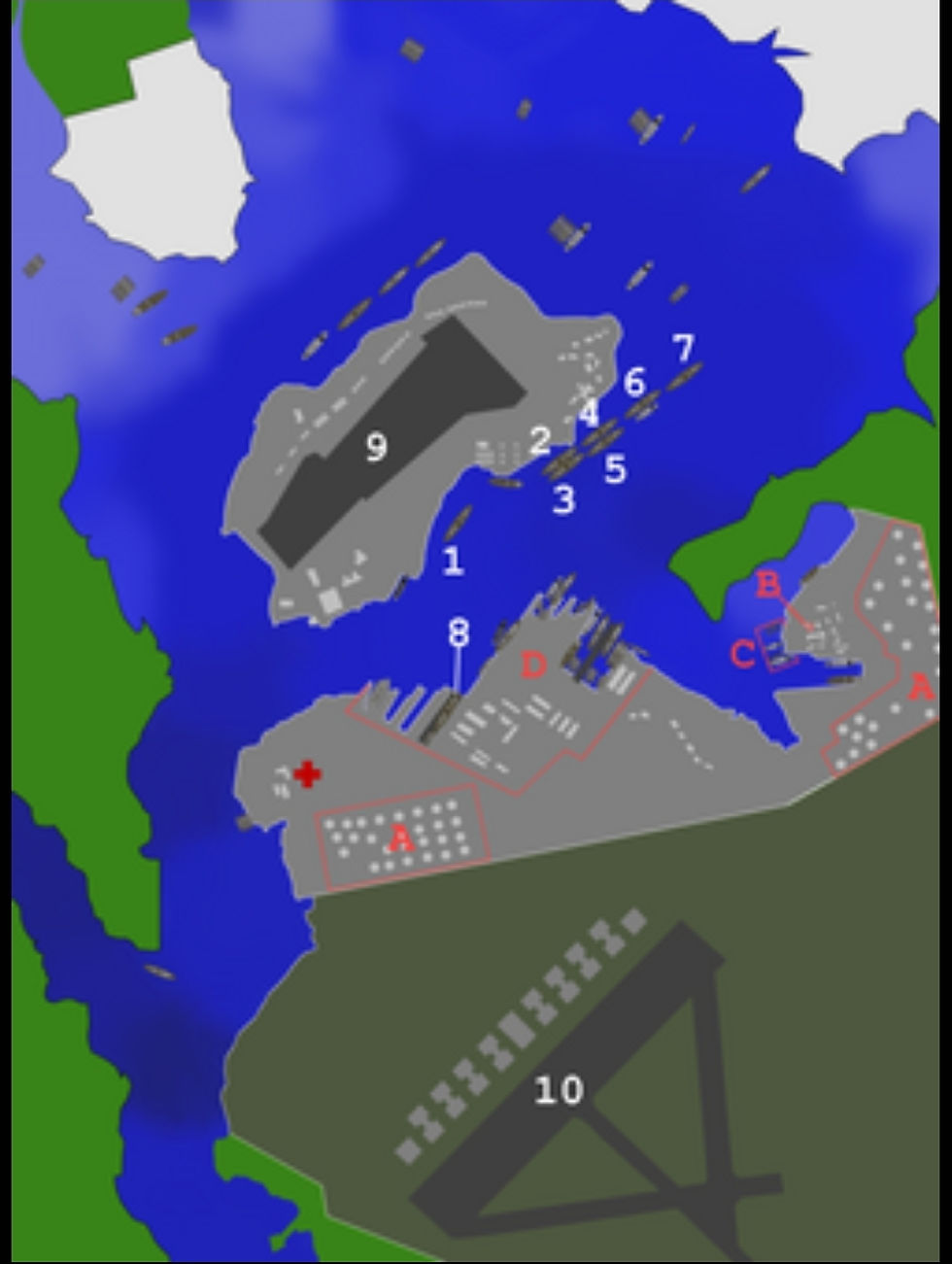
Pearl Harbor Attacked Targets 1941 1: USS California. 2: USS Maryland. 3: USS Oklahoma. 4: USS Tennessee. 5: USS West Virginia. 6: USS Arizona. 7: USS Nevada. 8: USS Pennsylvania. 9: Ford Island NAS. 10: Hickam field.
Ignored infrastructure targets: A: Oil storage tanks. B: CINCPAC headquarters building. C: Submarine base. D: Navy Yard.
Examining the outcomes of the 1941 Pearl Harbor attack, the primary targets and most significant losses were the U.S. Navy bases, the Marines, and naval equipments. The attack predominantly involved air strikes. Therefore, if we consider the Pearl Harbor attack as a type of formalistic proxy war, who would have sponsored Japan with such a formidable air force to strike the U.S. Navy? Additionally, given that the U.S. Air Force is known as the strongest air force globally, why was Japan able to carry out a surprise attack on the U.S. Navy at Pearl Harbor?
Four years later, in 1945, the U.S. Army Air Forces dropped an atomic bomb on Hiroshima, Japan, marking a historic answer. This was the first air raid using a nuclear weapon in human history, causing catastrophic damage to Japan and Asia. This leads to a logical speculation: did the U.S. Air Force use Japan as a proxy army, first invaded China and then destroyed the U.S. Navy? Of course, this is just a speculation. If this speculation holds true, then who was the proxy in World War II is self-evident.
Now, let's apply this logic to the colonial histories of China and Britain. The same question is, what opportunity allowed Britain, a relatively small nation, to successfully colonize Hong Kong from faraway China in 1841? If it was solely based on Britain's own strength and military power, would Britain have made such a brutal decision to colonize a far-off part of the East? Unless Britain was stupid; if Britain wasn't acting foolishly, then who truly sponsored Britain's colonization of Hong Kong and other regions in Asia?
Or perhaps this question should be posed as: Which country would China select to colonize on its own? If China got options.
According to public historical records, after World War I, the British Empire, Russian Empire, France, Japan, the German Nazis, the Kingdom of Italy, and the Austro-Hungarian Empire all attempted to take control of China. If China had the option to choose one of these nations to invade, a logical choice would be the least harmful+toxic one. However, in 1949, the establishment of the Chinese Communist Party marked the end of these empires.
SINCE World War I, public historical records have highlighted three major "evils": the British Empire, the Chinese Communist Party, and the Japanese Empire, all of which harbor animosity toward each other. Additionally, the German Nazis, the Roman Empire, and Tsarist Russia have been recognized for their racist-to-crime-laden histories. It may surprise some to discover in public history that 80% of the world's countries are portrayed as villains, while only the United States is depicted as good and neutral, even being portrayed as a victim in the Vietnam War.
March 2026, the US president Donald Trump made Pearl Harbor joke during meeting with Japanese prime minister. Asked by a reporter why the U.S. didn’t tell Japan or other allies about its decision to strike Iran before it did so, the president said: “We went in very hard and we didn’t tell anybody about it because we wanted surprise. Who knows better about surprise than Japan? OK, why didn’t you tell me about Pearl Harbor?”
“You believe in surprise, I think, much more than us,” Trump added, referencing the 1941 attack on the American fleet at Pearl Harbor in Hawaii that precipitated the United States’ entry into World War II.
Obviously, Trump was teasing Japan for being a sophisticated war planner.
It demonstrates that the role of a sophisticated planner is crucial in winning a war, whether for a nation or globally.


Reflecting on Hong Kong, the term 'planner' has certainly gained prominence today. The transformation of Hong Kong from a small fishing village to a global metropolis is deeply connected to its history and culture, with 'urban planners' being a significant factor. While many once referred to Hong Kong as a Cultural Desert, its evolution has ultimately bestowed upon it the title of a Cultural Museum.
Hong Kong's urban development is characterized by modernization, showcasing a blend of Western architectural influences and traditional Chinese culture. The most ingenious aspect is Hong Kong's application of traditional Chinese Feng Shui in urban planning. Feng Shui principles are evident throughout Hong Kong, skillfully merging aesthetics, architecture, and the natural environment into many urban areas. Hong Kong places particular emphasis on aligning feng shui with the natural surroundings, rooted in the core idea of harmoniously matching and balancing the environment with natural interactions.
In Chinese Feng Shui, the north is associated with water, the west with gold, the east with wood, the south with fire, and the center with earth. This theory stems from ancient Chinese philosophers' thorough observation and understanding of natural laws. It reflects the wisdom of connecting spatial directions with material properties, seasonal climates, and natural phenomena. The east, where the sun rises and life thrives, symbolizes wood; the south, with its abundant sunlight and warm climate, represents fire; the west, akin to sunset, austerity, and harvest like autumn, symbolizes gold; the north, being cold and wet, represents water; and the central earth sustains and nurtures all life, coordinating the directions to allow harmonious development and maintain global sustainability. By viewing the world as a whole, these conclusions can be reached as below:

Hong Kong's urban planning incorporates a combination of directions and the five elements (metal, wood, water, fire, earth) instead of attempting to control them. For instance, in Feng Shui, the northwest is associated with gold and water. If a fire occurs in this area, it is believed to generate a detrimental energy known as taboo called 'burning the heaven' in Feng Shui which is seen as disastrous. The idea is that fire overpowers gold, leading to a direct conflict of energies that might impact the health of residents, similar to living in a place where ice and fire meet without any transition.
As a result, urban planning keeps being mentioned, which naturally brings to mind the most talked-about candidate in the recent Los Angeles mayoral race. Nithya V. Raman (born July 28, 1981) is an American urban planner, activist, and politician serving as the Los Angeles city councilmember for the 4th district since 2020. Why does California place so much value on a mayoral candidate with an urban planner background? The answer might be linked to California wildfires.
California's brutalist wildfires clearly highlight a failure in urban planning. If we apply Hong Kong's urban planning principles to California, we would discover that California is exactly westernmost point in the world, symbolizes 'gold' in Feng Shui. The frequent fires in California create a significant Feng Shui taboo: fire burning the heaven. When any direction—east, south, west, north, or center—suffers catastrophic destruction, it signifies a loss of balance in the world. Therefore, by this reasoning, California's brutalist wildfires could be a curse to humanity.
Who, then, is the proxy urban planner behind this brutalist wildfire curse?
In contrast, the Obama Presidential Center is situated in a prime location, encircled by mountains and lakes. It was opened on the 250th anniversary of the United States, subtly reminding skeptical critics that Brutalism is an integral part of human civilization. With careful planning, Brutalist architects can also play a proxy role in the urban development of global peace.


Comments